Endodontic Rotary Files: A Practical Guide for Dentists Choosing Root Canal Instruments

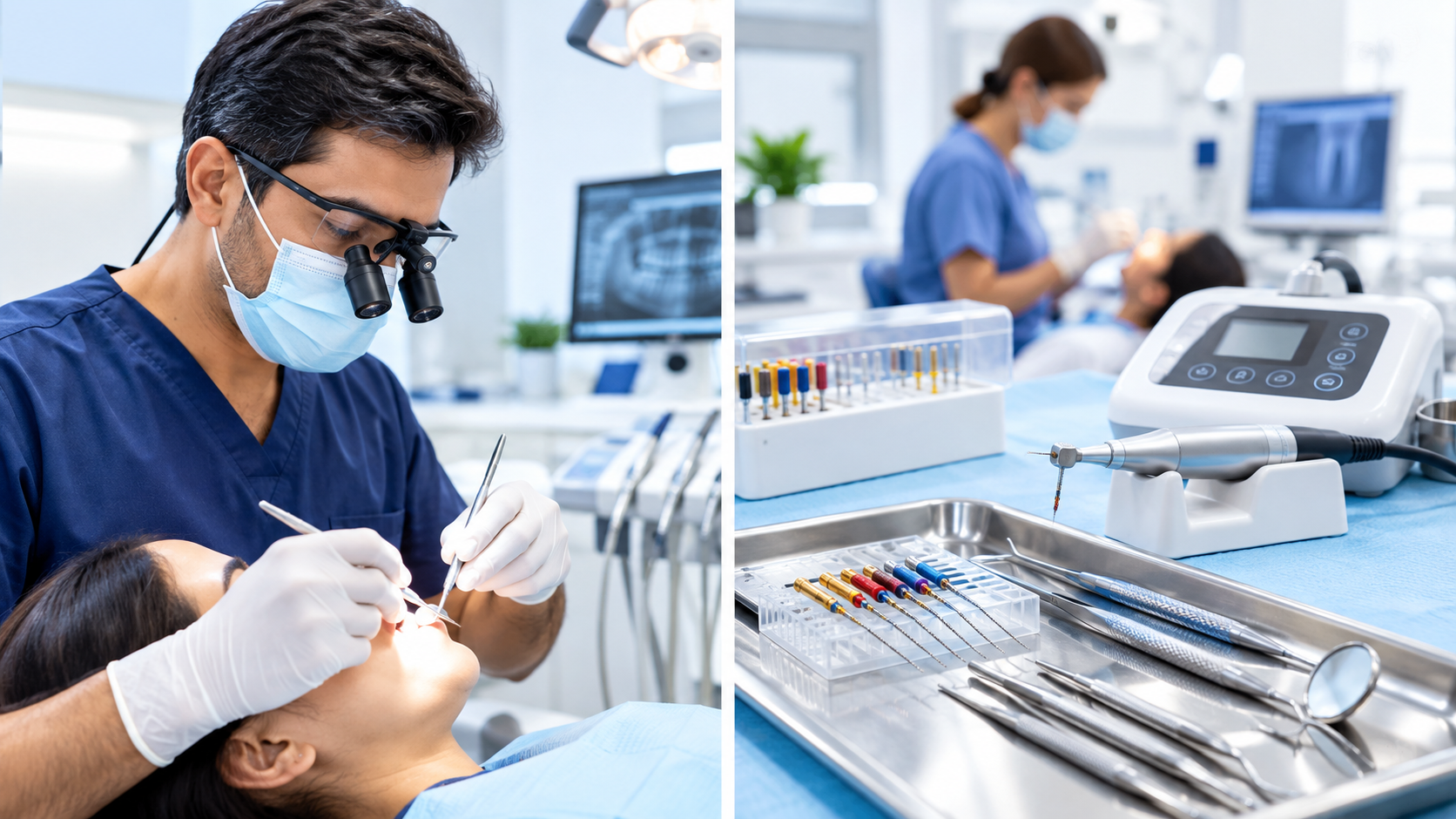
Dental Loupes for Dentists: Why Magnification Matters
Modern dentistry requires dentists to work with a high level of visual precision. Procedures such as endodontics, restorative dentistry, periodontal treatment and microsurgical procedures often involve small anatomical structures that can be difficult to see clearly with the naked eye.
Dental loupes provide magnification and illumination that can help dentists obtain a clearer view of the working area while maintaining a more controlled clinical posture.
For dentists considering magnification equipment, the right loupe is not simply about choosing the highest magnification. Working distance, field of view, depth of field, optical quality, weight and ergonomics all influence the clinical experience.
What Are Dental Loupes?
Dental loupes are magnification devices worn by dental professionals to enlarge the treatment area.
Depending on the optical design, loupes can provide different levels of magnification, working distances and fields of view.
They are commonly used in:
- Restorative dentistry
- Endodontics
- Periodontics
- Implant dentistry
- Oral surgery
- Prosthodontics
- General dental procedures
The objective is to provide a more detailed visual field so the dentist can work with greater visual information.
5 Important Benefits of Dental Loupes
1. Better Clinical Visibility
Magnification can make small structures and treatment areas easier to observe.
Improved visibility may be particularly useful during procedures where precision is important.
2. Support for Precise Dental Procedures
Dentistry frequently involves working within a relatively small operating field.
Magnification can help clinicians distinguish fine anatomical and procedural details that may be difficult to identify without optical assistance.
3. Improved Ergonomic Awareness
Dentists often spend extended periods working in a seated or standing position.
An appropriately selected loupe with a suitable working distance can help the clinician maintain a more natural working posture instead of repeatedly bending forward to obtain a closer view.
4. Reduced Visual Strain During Detailed Procedures
A clear magnified field may make it easier to inspect small treatment areas.
However, adaptation to magnification takes time, and dentists should select optics based on their clinical requirements and working style.
5. A More Consistent Clinical Workflow
When magnification becomes part of a dentist’s regular workflow, it can support a consistent visual approach across detailed procedures.
How to Choose Dental Loupes
Dentists should evaluate several factors before purchasing magnification equipment.
Magnification Level
Different procedures may require different magnification levels.
Higher magnification does not automatically mean better performance. Increasing magnification can also affect the field of view and depth of field.
The appropriate level should therefore be based on the dentist’s clinical requirements.
Working Distance
Working distance is the distance between the optical system and the treatment area.
Choosing the correct working distance is important because it affects posture, comfort and usability.
Field of View
A wider field of view can make it easier to maintain awareness of the surrounding treatment area.
Depth of Field
Depth of field determines how much of the working area remains acceptably focused as the working distance changes.
Weight and Balance
Dental professionals may wear loupes for several hours.
A lightweight and well-balanced optical system can therefore be an important consideration.
Illumination
A dedicated dental light or loupe-mounted illumination system can complement magnification by improving visibility of the treatment area.
Fixed or Custom-Fitted Dental Loupes?
Dental professionals can choose between standard and customized optical configurations.
A custom-fitted loupe can be designed around the dentist’s:
- Interpupillary distance
- Working distance
- Declination angle
- Preferred magnification
- Frame requirements
- Clinical working position
For dentists who use magnification extensively, these factors can significantly influence day-to-day comfort.
Dental Loupes and Ergonomic Dentistry
Ergonomics is becoming increasingly important in modern dental practice.
Dentists spend considerable time performing precision work while maintaining a relatively fixed body position. Poor working posture may contribute to discomfort over time.
The objective of ergonomic magnification is not simply to enlarge the image. It is to provide a usable visual field while allowing the clinician to work at an appropriate distance.
Why Professional Support Matters
Selecting dental loupes online based only on magnification specifications may not be sufficient.
A professional fitting and assessment can help dentists understand:
- Suitable magnification
- Working distance
- Frame configuration
- Optical design
- Illumination requirements
- Adjustment and maintenance requirements
TeneX Healthcare distributes professional dental equipment and currently features Univet Italy surgical loupes, including MyErgo, Ergo Advanced and tailor-made Galilean/prismatic configurations.
Frequently Asked Questions
Are dental loupes useful for general dentists?
Yes. Dental loupes can be used across many areas of dentistry where improved visual magnification is useful.
What magnification should a dentist choose?
There is no single magnification level suitable for every dentist. The appropriate choice depends on the procedure, working distance, field of view and the clinician’s experience.
Do dental loupes help with posture?
Properly fitted loupes can support a more appropriate working distance and posture. The fitting and optical configuration are important.
Are higher magnification loupes always better?
No. Higher magnification can provide more detail but may reduce field of view and depth of field. The appropriate balance depends on the clinical application.
How should dentists select dental loupes?
Consider magnification, working distance, field of view, depth of field, weight, optical quality, illumination and professional fitting support.
Conclusion
Dental loupes are becoming an important part of precision-focused modern dentistry. The right optical system can provide enhanced visual information while supporting a more consistent and ergonomic clinical workflow.
Instead of selecting a loupe based only on magnification, dentists should evaluate the complete optical and ergonomic configuration according to their clinical needs.
Looking for professional dental loupes?
Explore TeneX Healthcare’s range of Univet Italy surgical loupes and speak with the team about the right configuration for your practice.